
Tankless Installs in the Greater Richmond Metro Area
Real tankless water heater installs in Richmond-area homes, so you can see what an installation actually looks like before you talk to anyone. Each one comes with notes on what to look for.
Photos shared by local homeowners. These units were installed by various contractors, not by us. Exact locations are not shown.
Natural gas, condensing, in a garage
- Fuel
- Natural gas
- Type
- Condensing
- Location
- Garage wall
- Venting
- Two plastic pipes
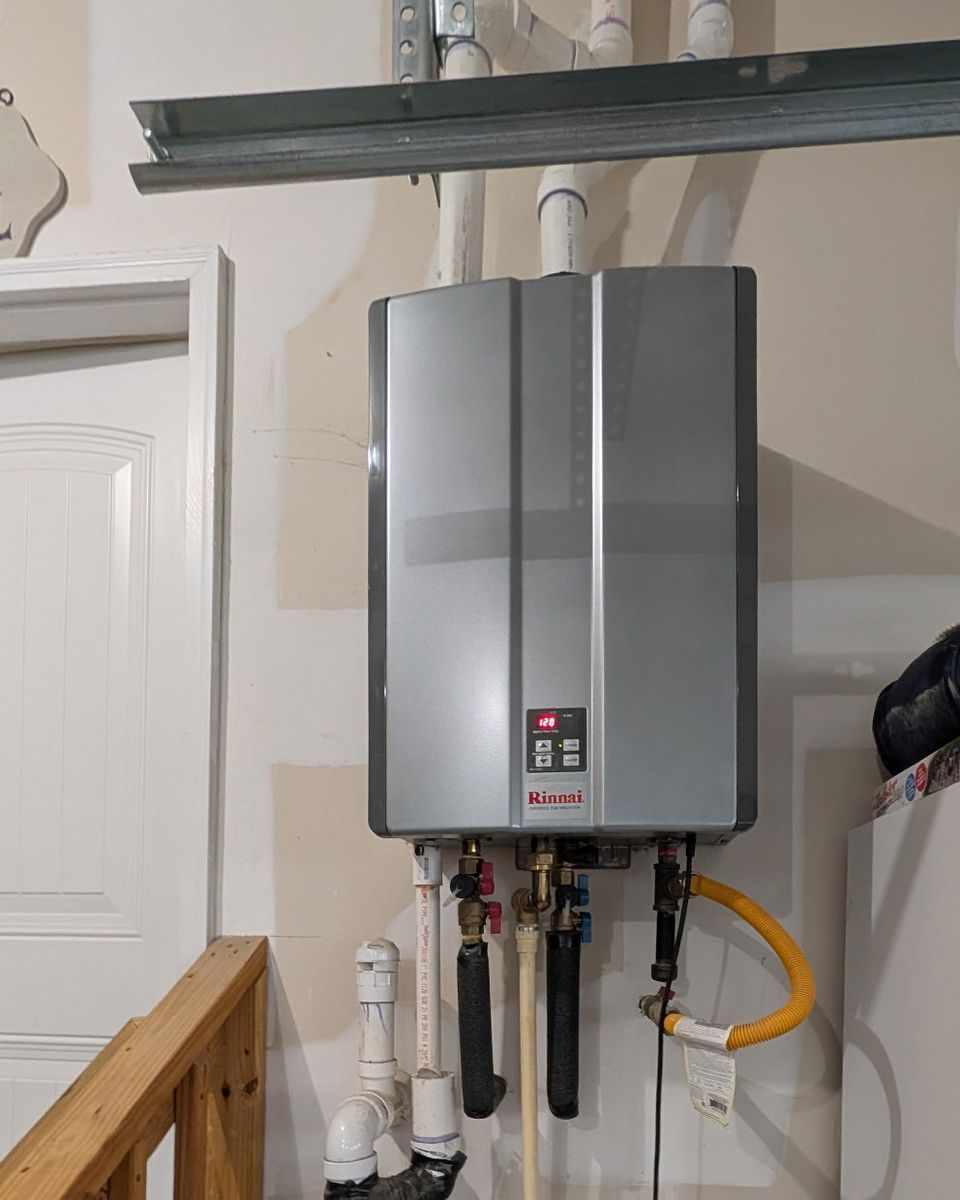
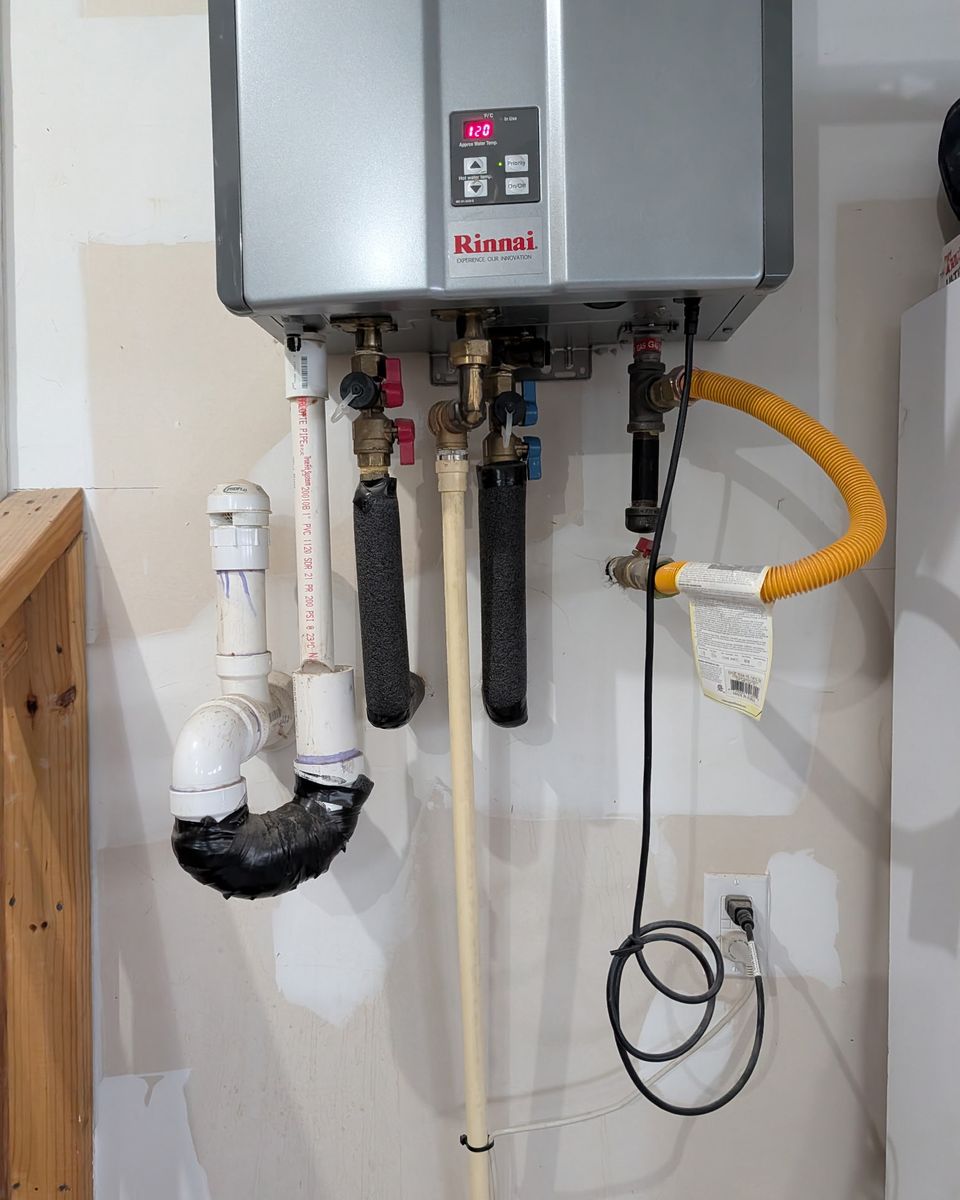
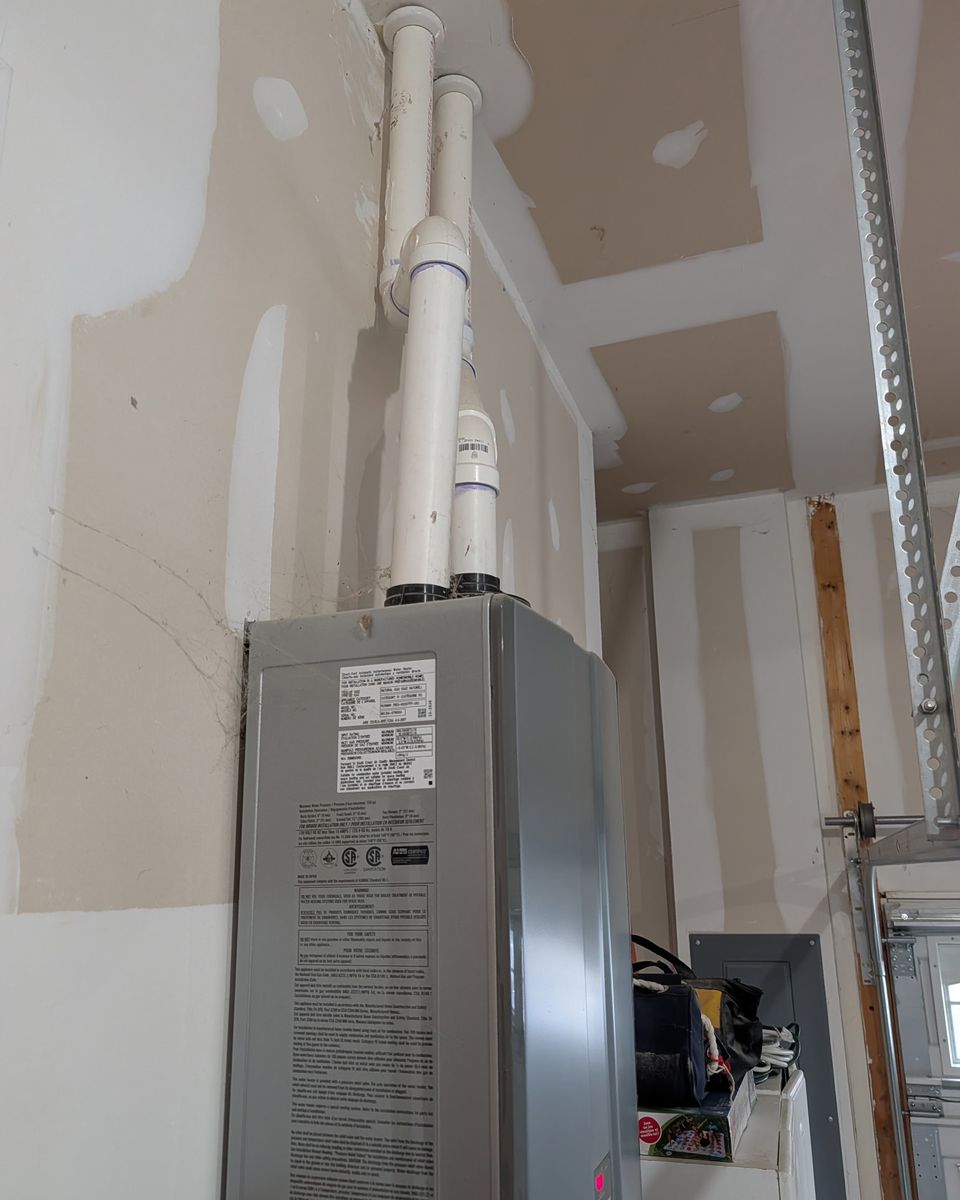
What to notice: two plastic vent pipes run up through the garage ceiling, one bringing in combustion air and one carrying exhaust out, which is typical of a condensing unit. Below the unit are the service valves with red and blue handles used for flushing, a flexible gas connector, and the power cord plugged into a nearby outlet.
Natural gas, non-condensing
- Fuel
- Natural gas
- Model
- Rinnai RL94i
- Location
- Garage corner
- EnergyGuide estimate
- $228 a year
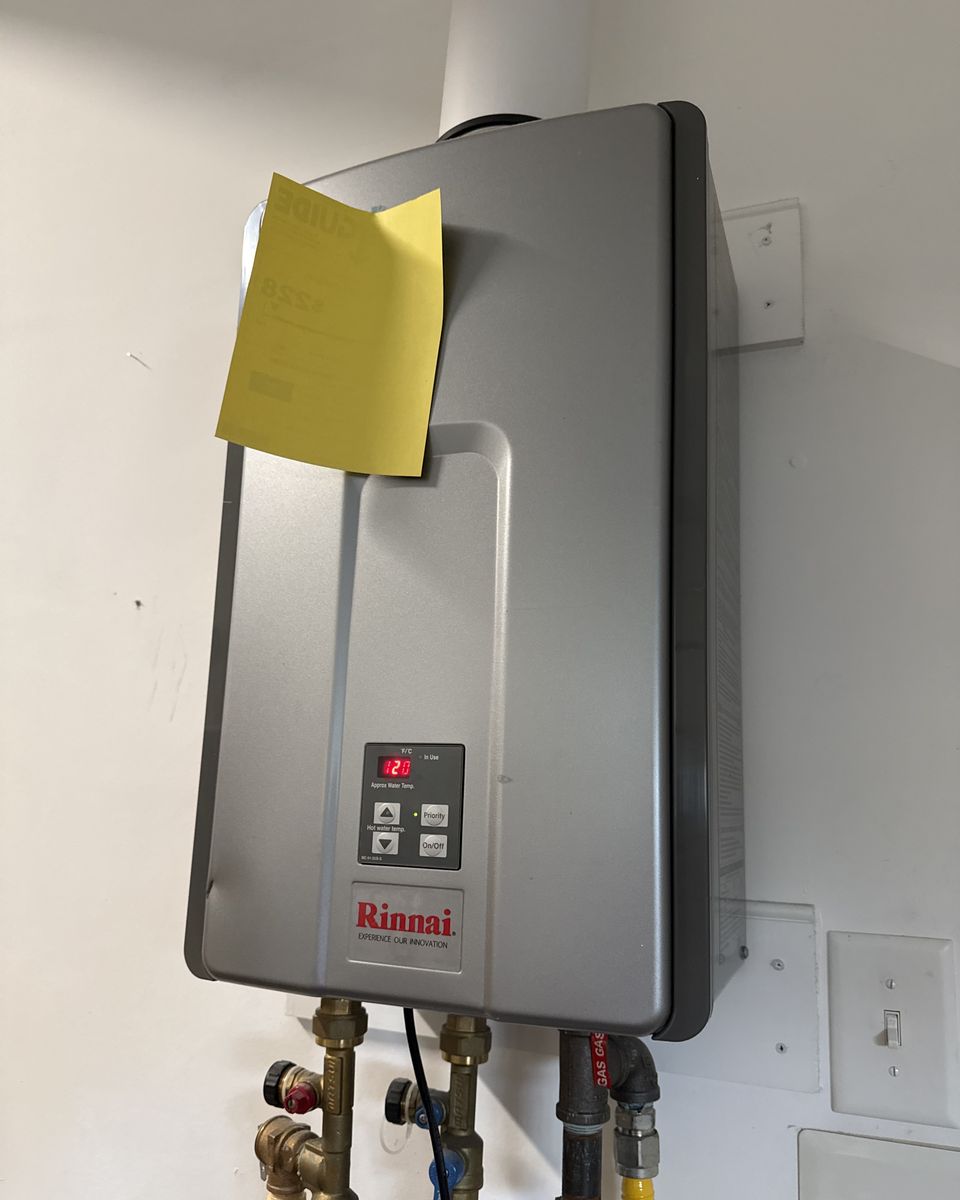
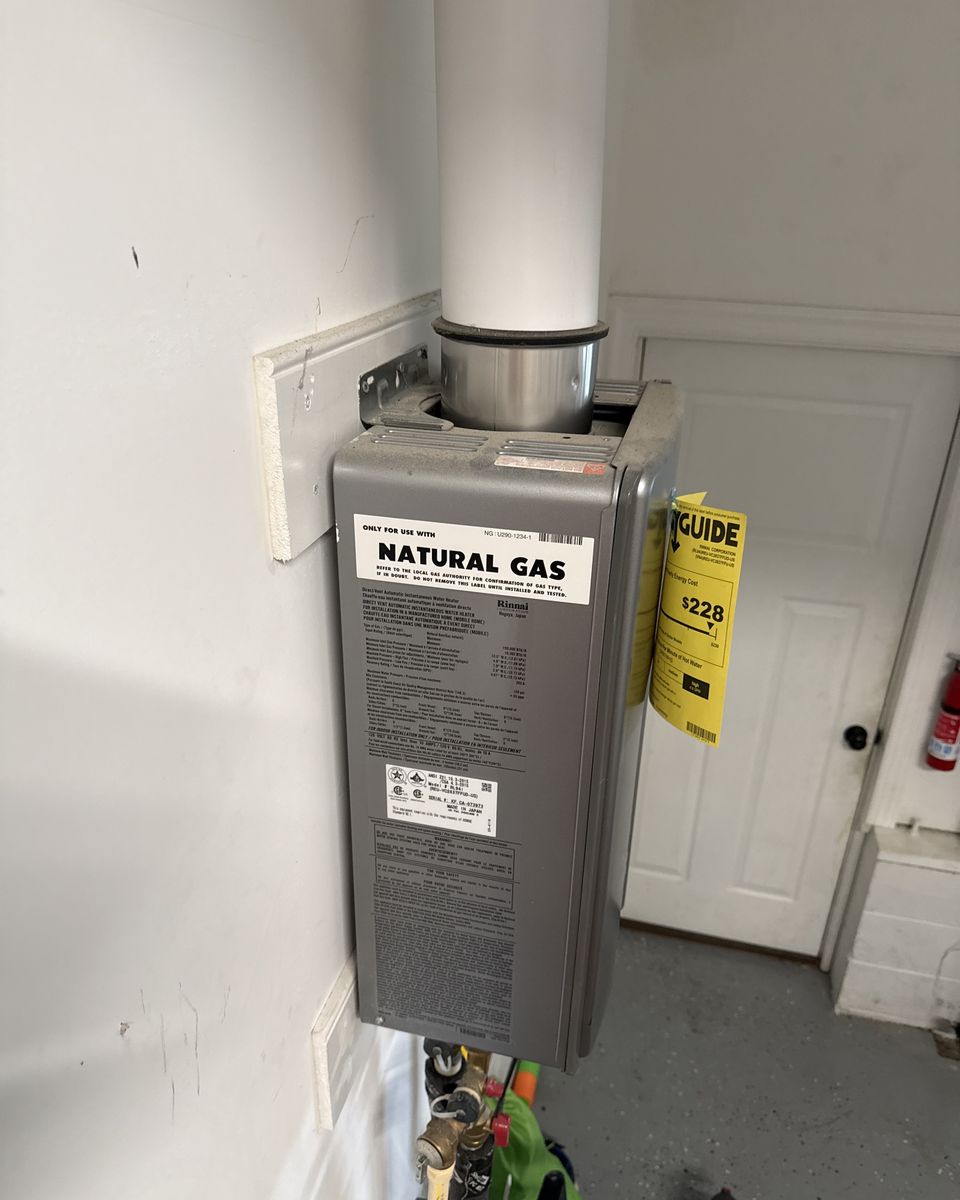
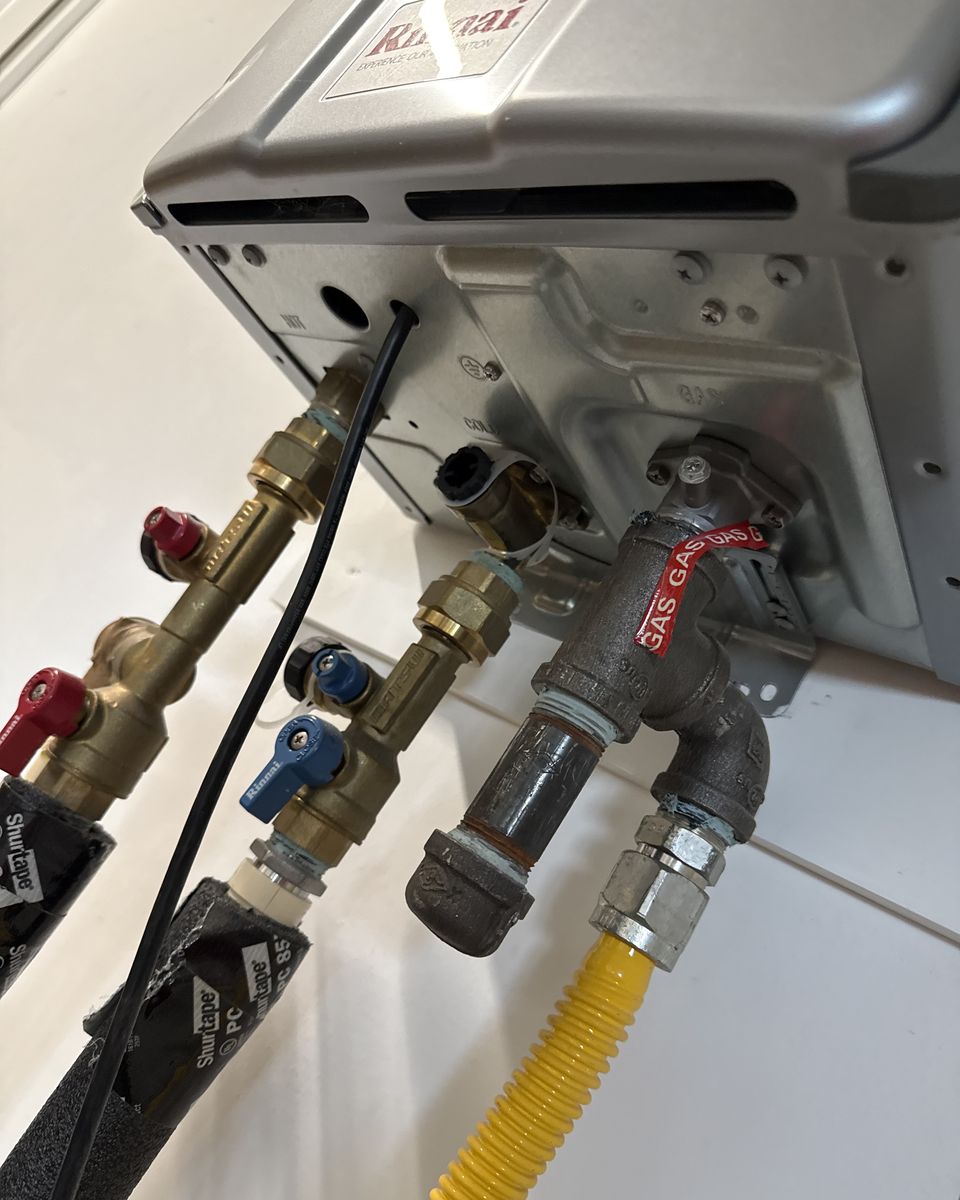
What to notice: in the close-up, the gas line has a tee with a capped drip leg right at the unit, which catches debris before it can reach the burner. The yellow EnergyGuide label estimates $228 a year to run this unit on natural gas. Compare that with the next install.
The same model on propane
- Fuel
- Propane
- Model
- Rinnai RL94i
- Location
- Garage wall
- EnergyGuide estimate
- $552 a year
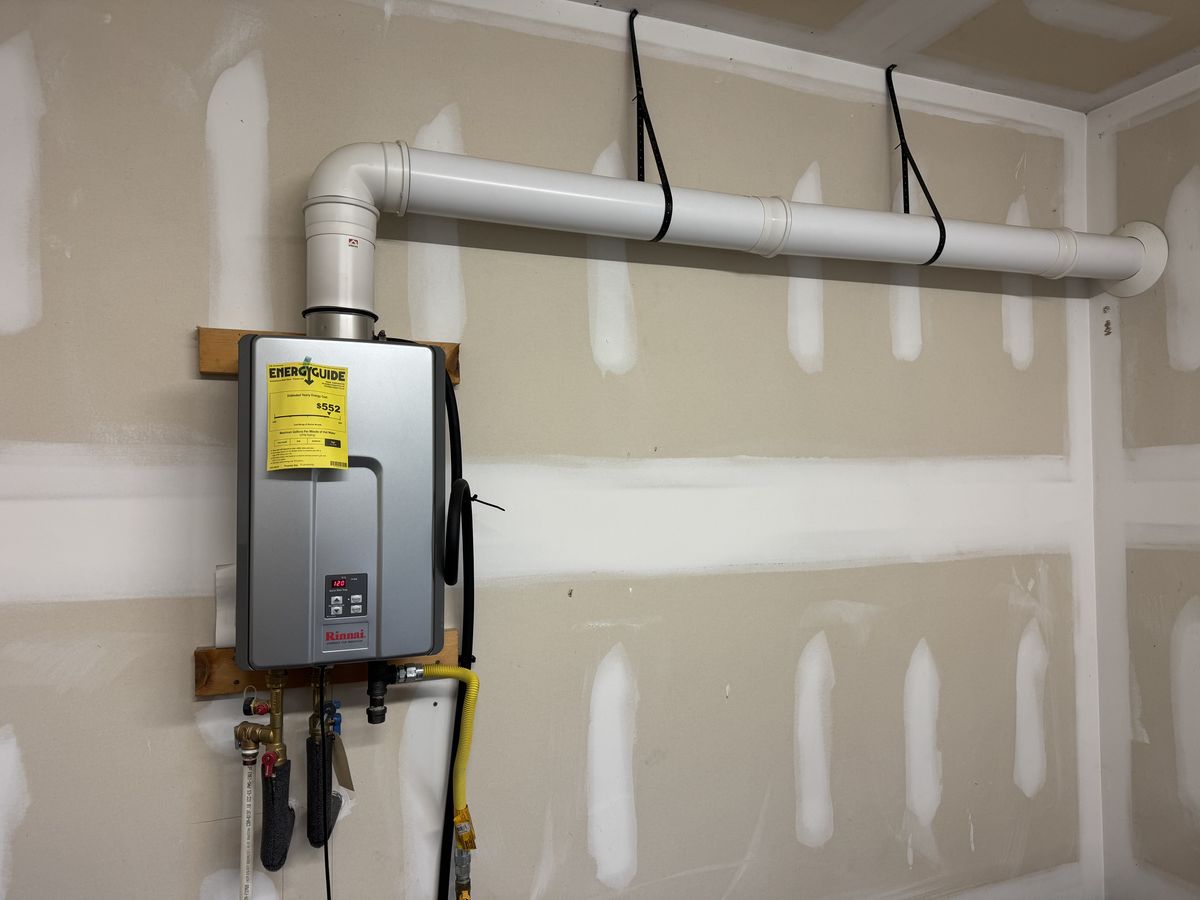
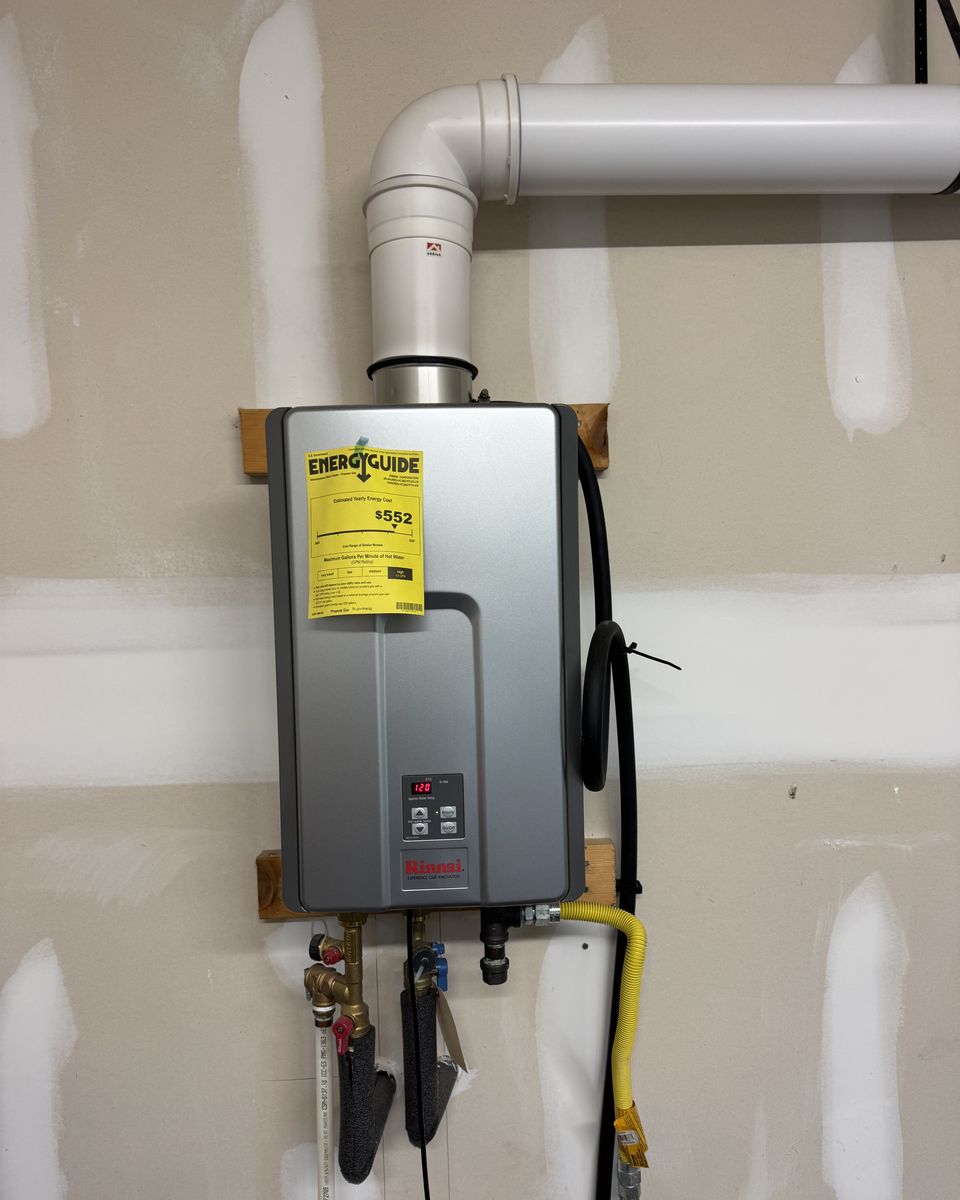
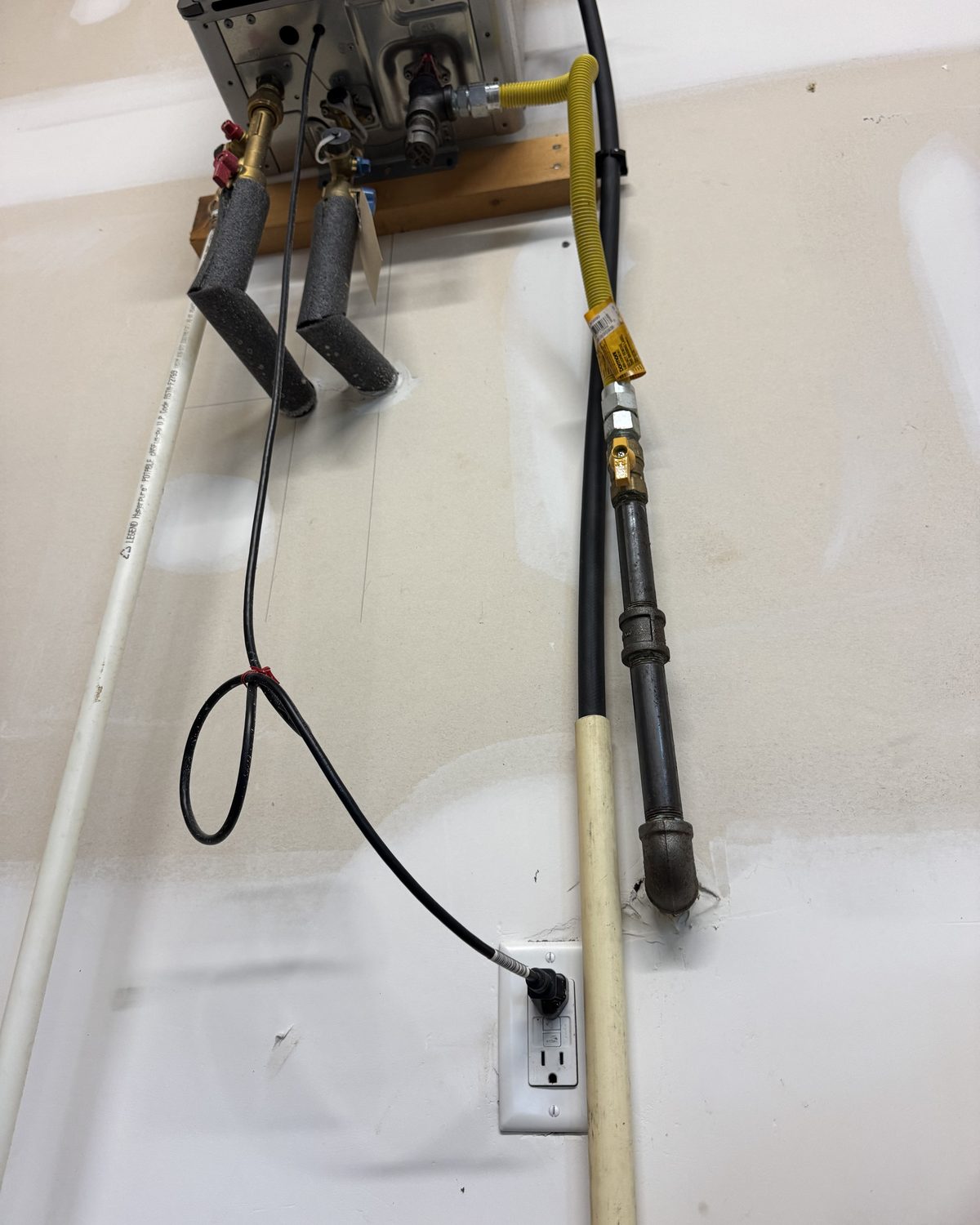
What to notice: this is the same model as the install above, running on propane. Its EnergyGuide label estimates $552 a year, compared with $228 for the natural gas unit, because propane usually costs more for the same amount of heat. The labels use national average fuel prices, so your actual cost depends on local rates. The vent here runs across the garage to an outside wall, held up by straps.
Propane, mounted high on a garage wall
- Fuel
- Propane
- Location
- High on a garage wall
- Mounting
- Wood blocking
- Venting
- Single vent pipe
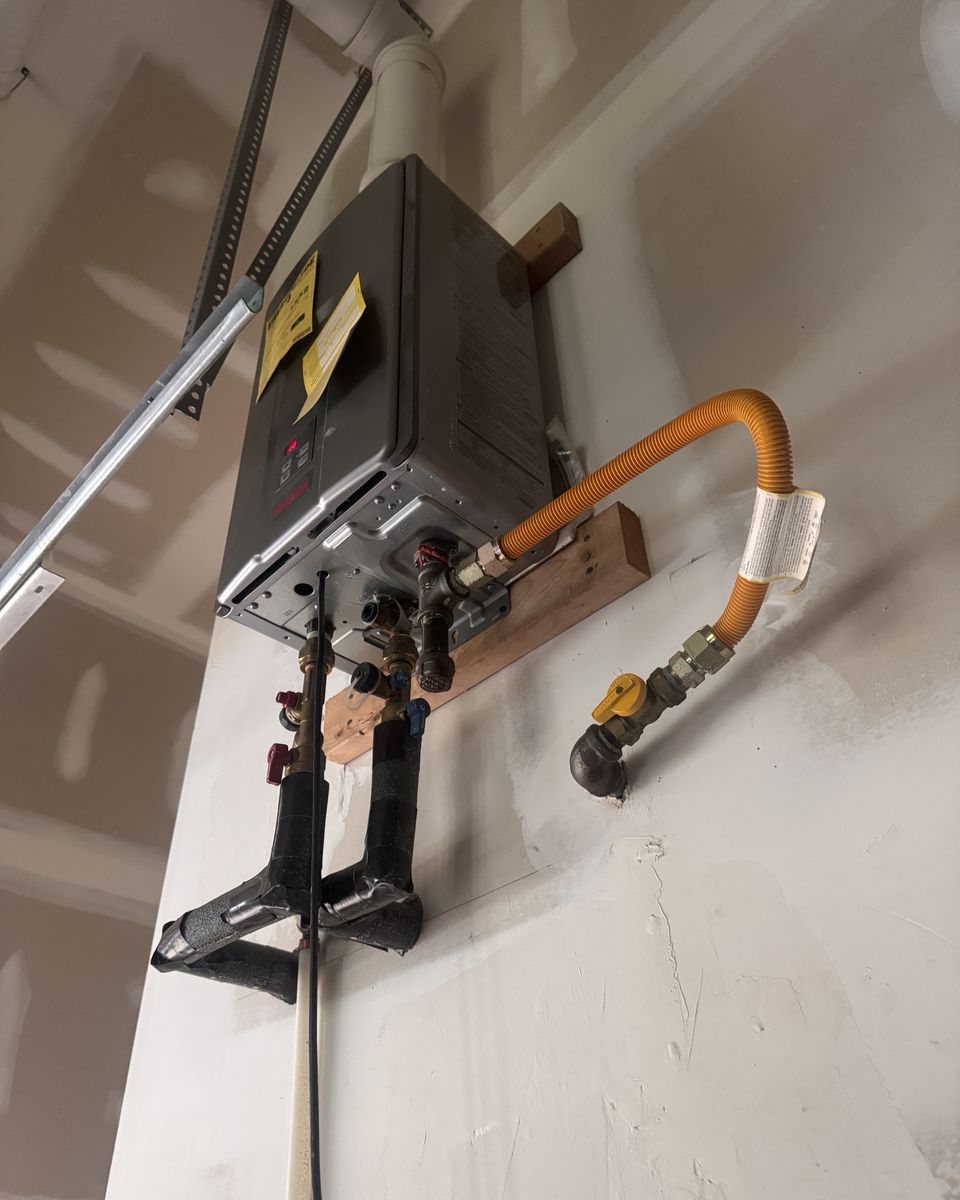
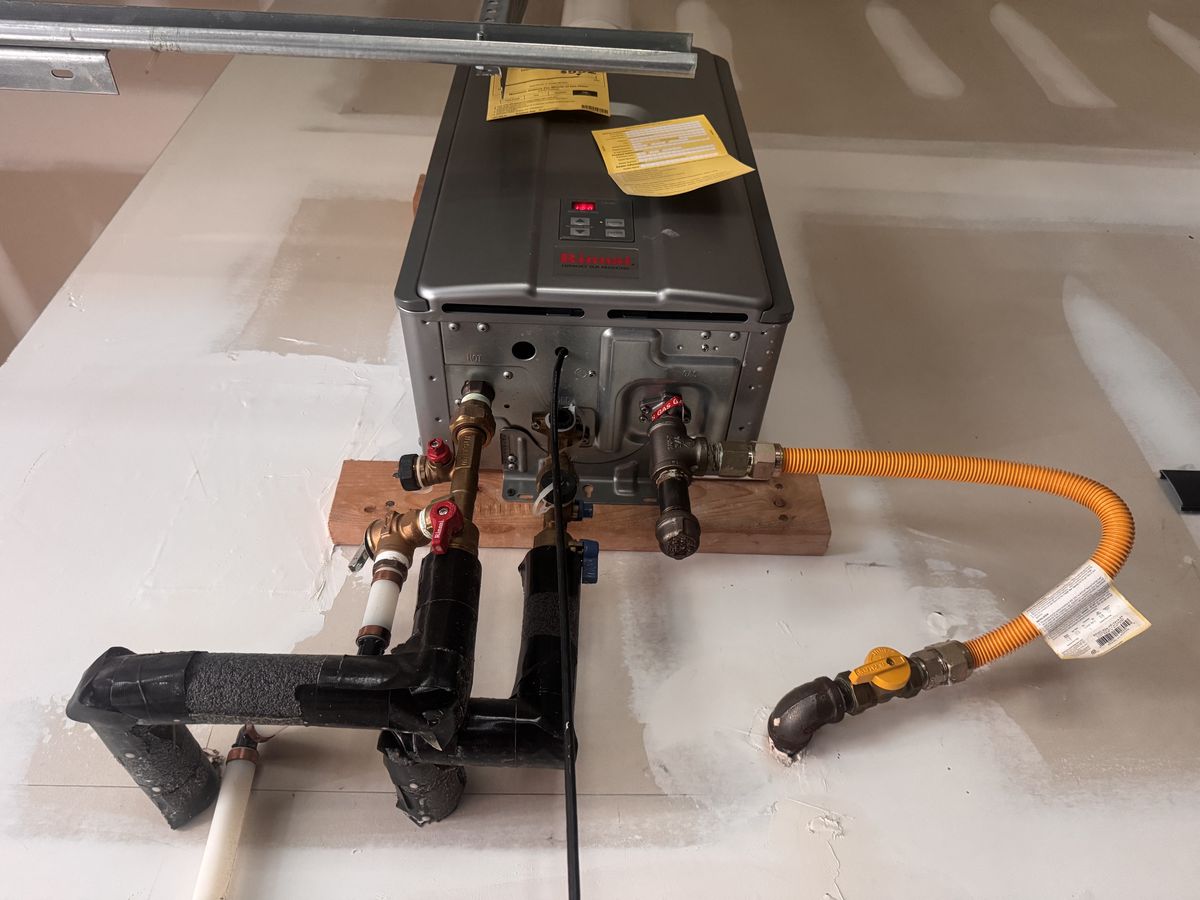
What to notice: the unit sits up high on wood blocking, out of the way of the garage door track. The gas line comes out of the wall through a yellow-handled shutoff valve, then a flexible connector runs up to the unit, which has a capped drip leg at its gas inlet.
A newer condensing model
- Fuel
- Gas
- Type
- Condensing
- Location
- Finished garage
- Venting
- Two plastic pipes
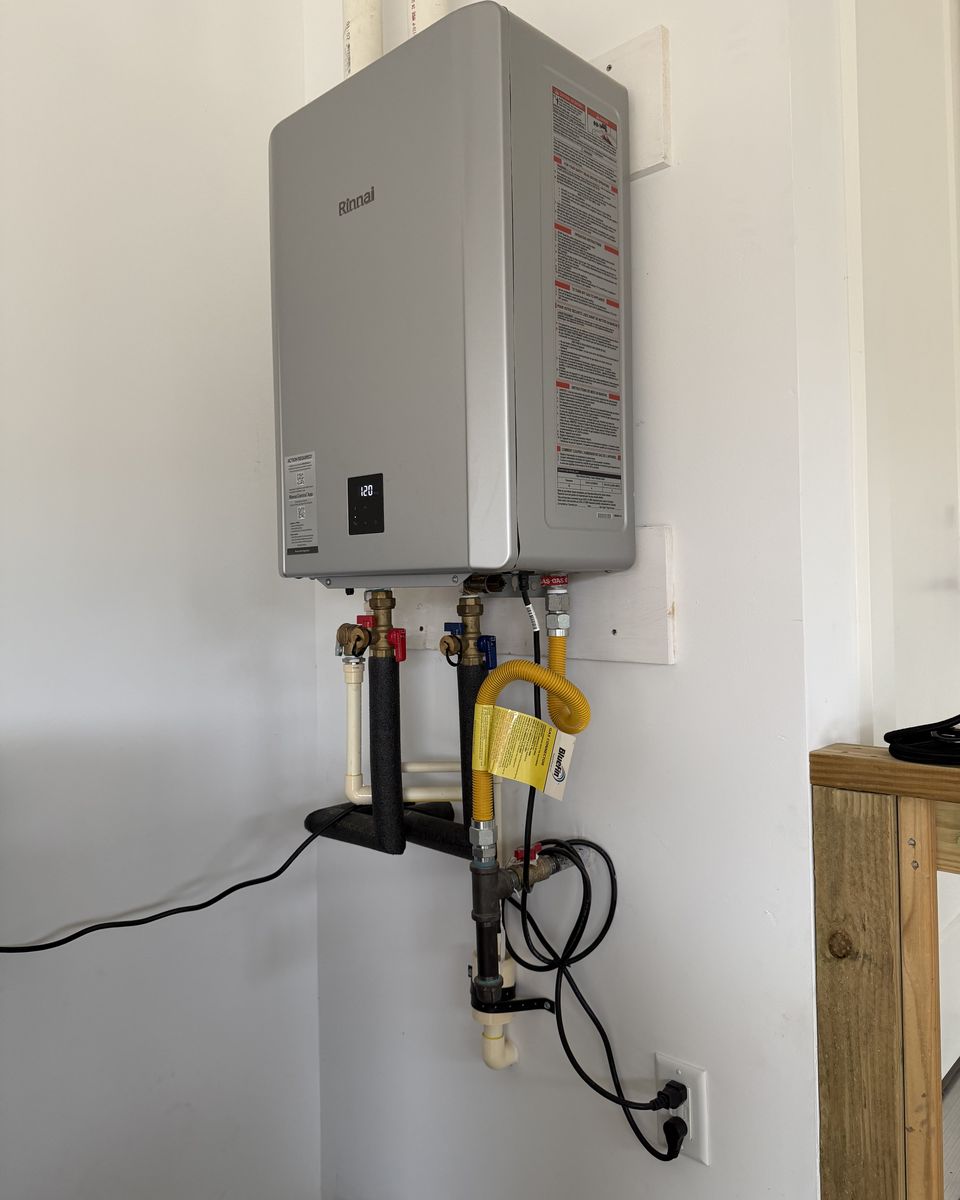
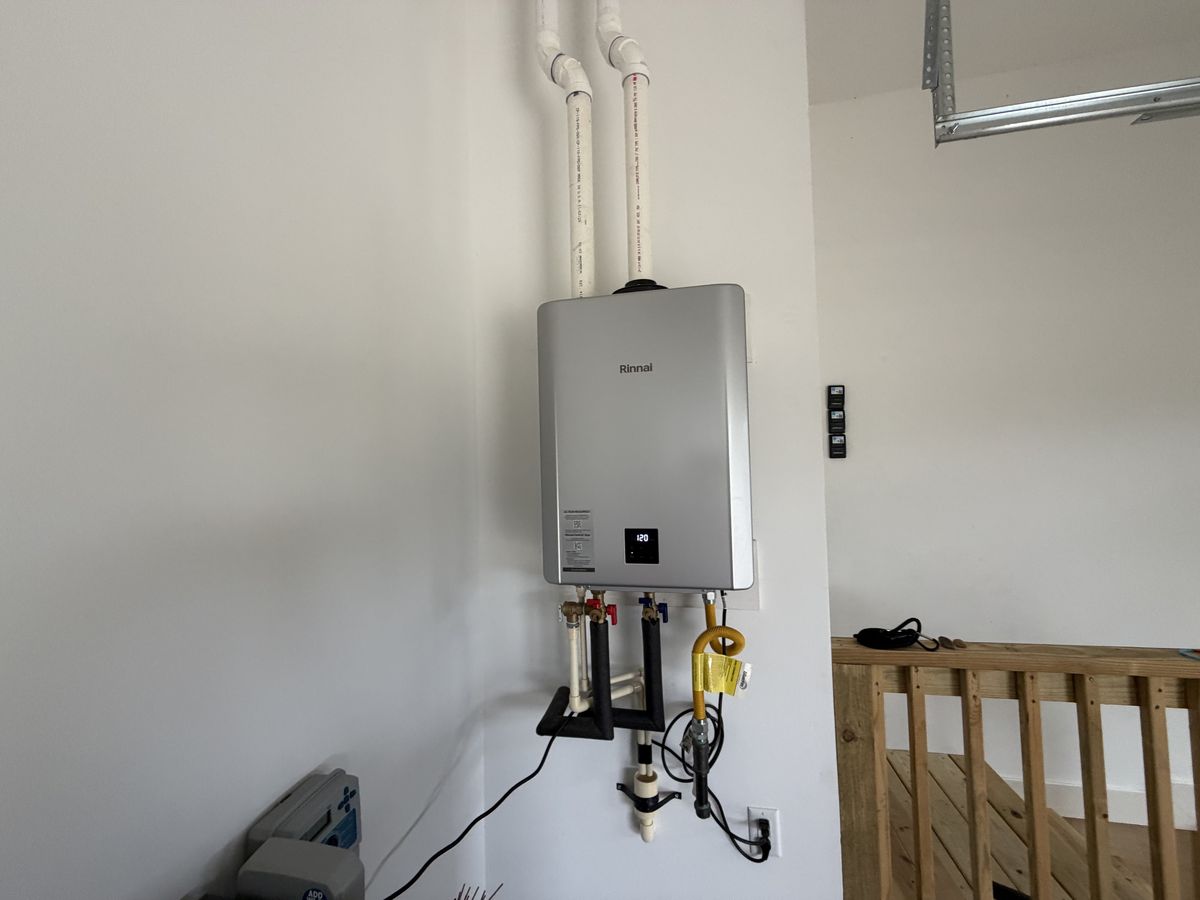
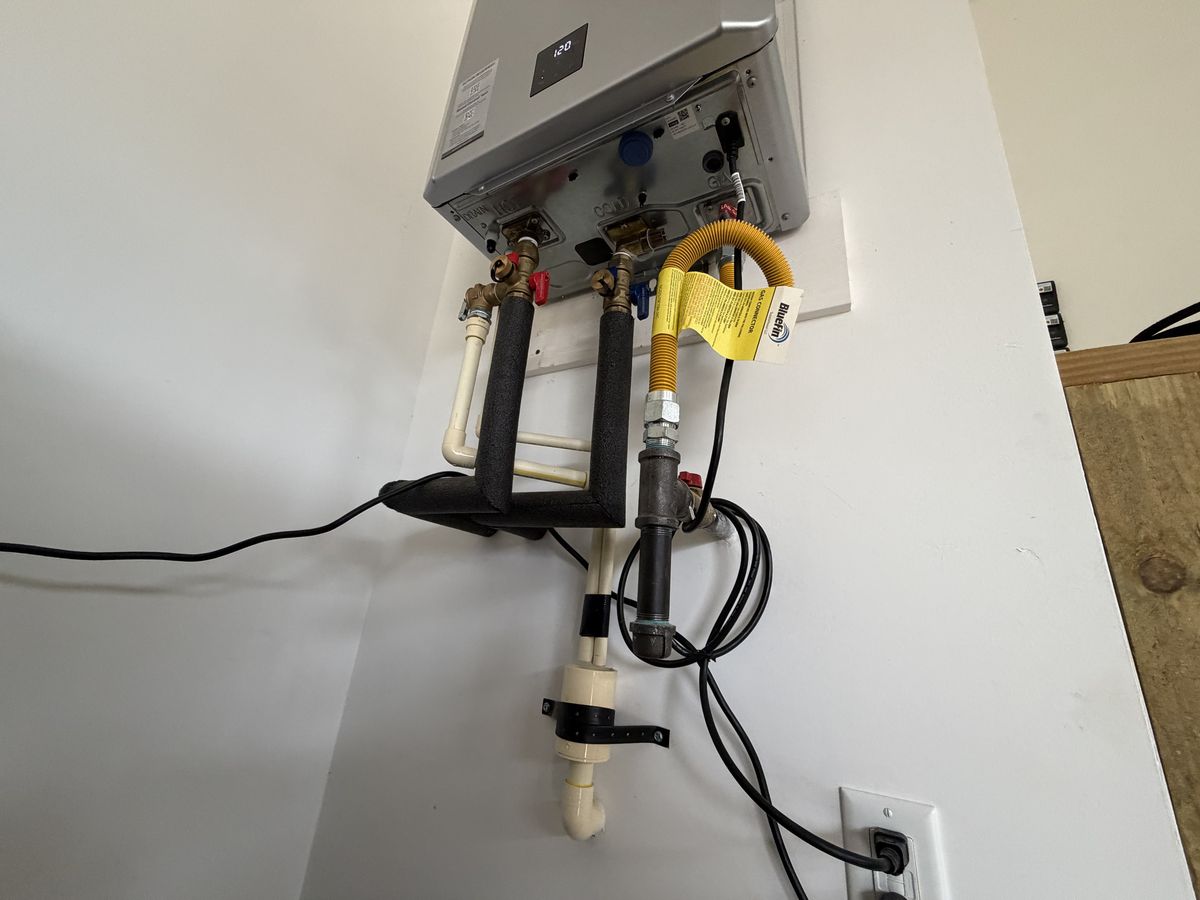
What to notice: a newer model with a touch-style display. Two plastic vent pipes run straight up the wall. Underneath: insulated water lines, service valves for flushing, a flexible gas connector, and the power cord to an outlet below.
Propane with a long vent run
- Fuel
- Propane
- Location
- Garage wall
- Mounting
- Wood blocking
- Venting
- Long run across the ceiling
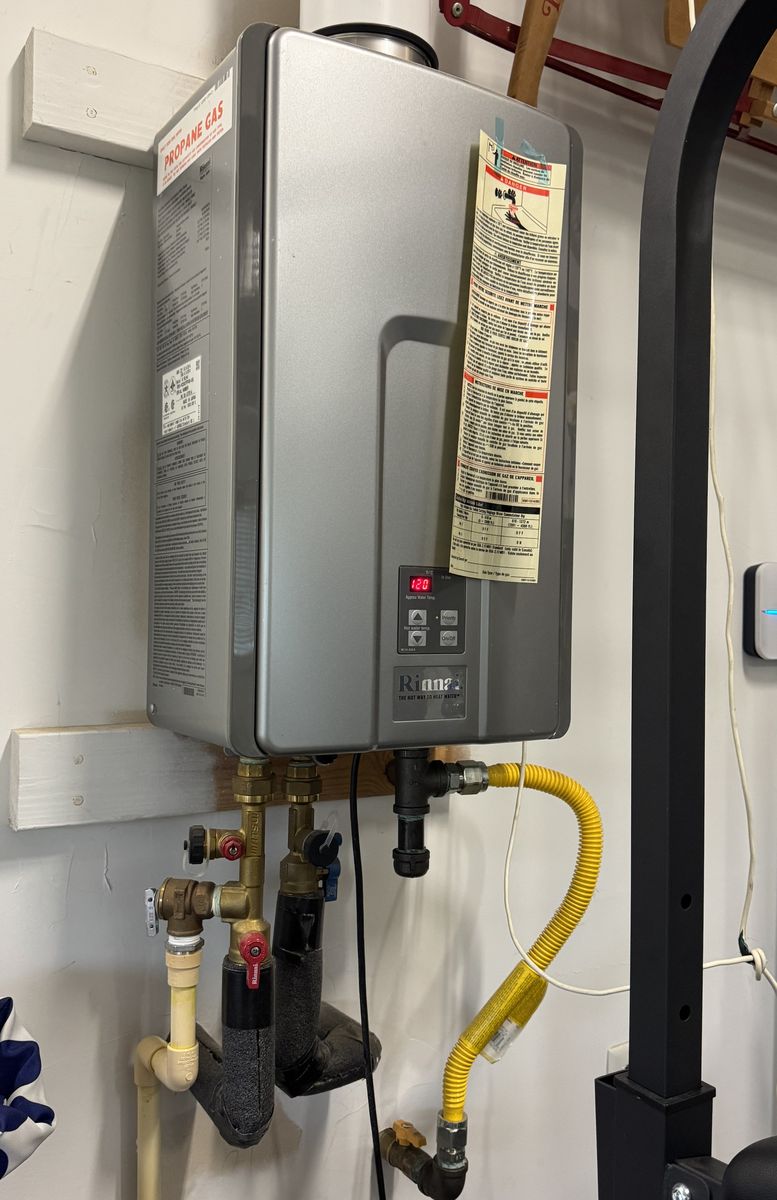
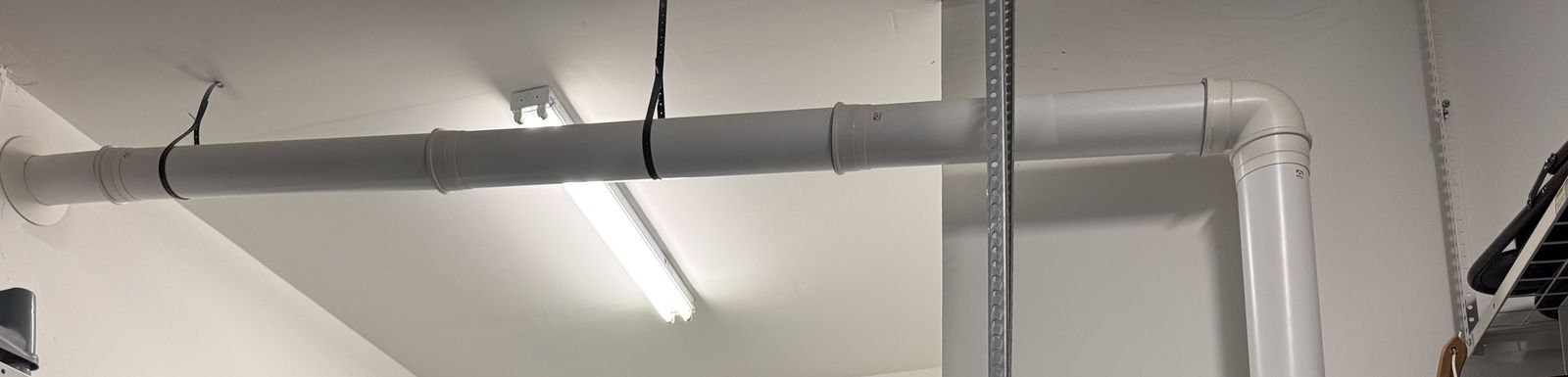
What to notice: the vent rises from the unit, turns, and runs the length of the garage ceiling to an outside wall, held up by straps along the way. Every model's installation manual sets a maximum vent length, so a long run like this one has to be planned to stay within it. Below the unit, the gas line has a capped drip leg at the inlet and a flexible connector down to a yellow-handled shutoff valve.
Propane, condensing, in a sealed crawlspace
- Fuel
- Propane
- Type
- Condensing
- Location
- Sealed crawlspace
- EnergyGuide estimate
- $480 a year
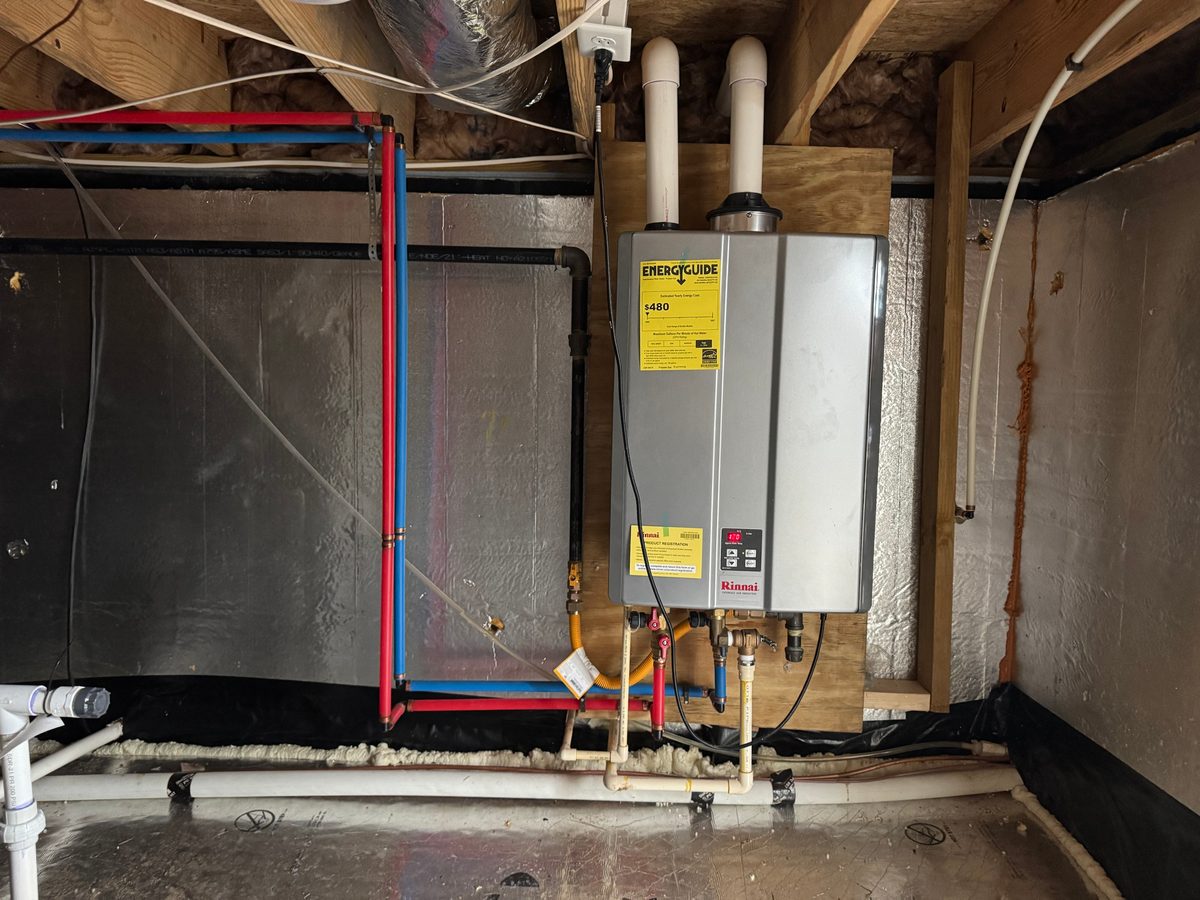
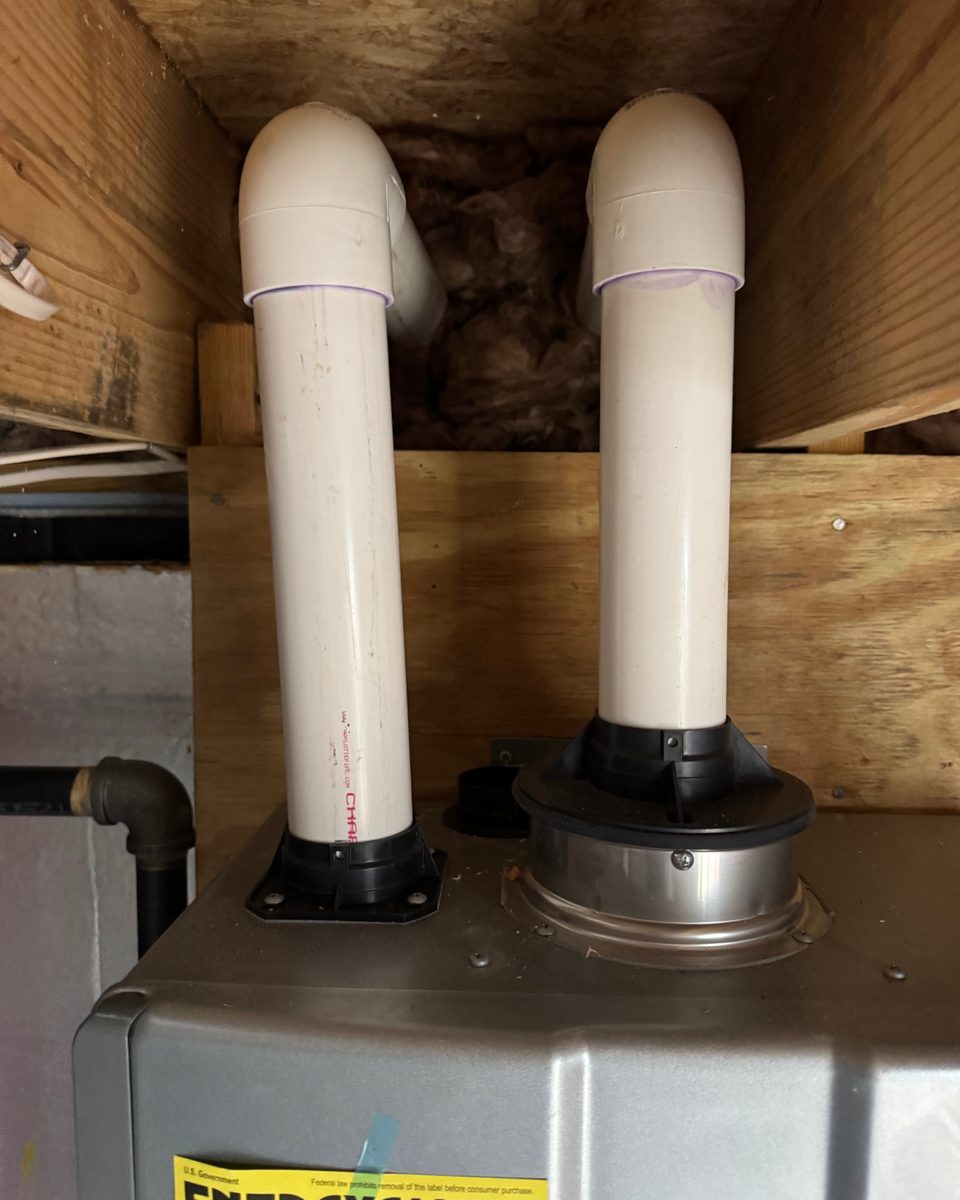
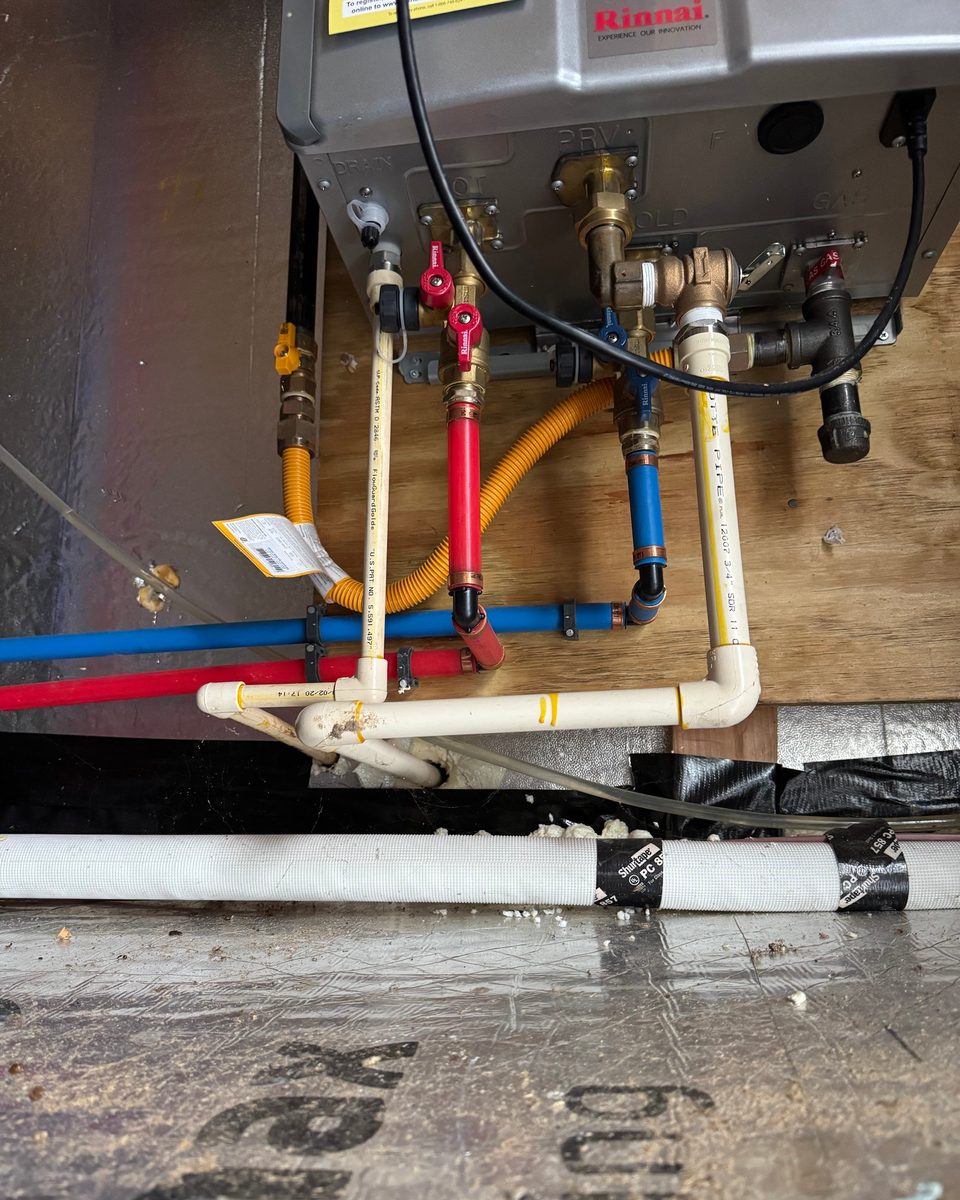
What to notice: the unit hangs on a plywood panel, up off the crawlspace floor, in a space lined with foil-faced foam board and a vapor barrier. Two plastic vent pipes rise from the top, then turn and run between the floor joists to the outside. Below the unit are red and blue service valves for flushing, a pressure relief valve, plastic drain lines, and a flexible gas connector with a capped drip leg at the inlet.
Thinking about a crawlspace? It can free up garage or closet space, but it raises a few questions worth asking a contractor: whether there is room to reach the unit for flushing and repairs, where the vent pipes will exit, where a condensing unit's drain water will go, and how the unit is protected from freezing. Most tankless units guard against freezing with small built-in heaters that only work while the unit has power.
A checklist for any tankless install
Whether you're looking at your own unit or reviewing a quote, these are the details that show up across the installs above:
- Service valves on the water lines, so the unit can be flushed.
- A gas shutoff valve and a capped drip leg, or sediment trap, at the gas inlet.
- A pressure relief valve.
- Venting in the material the manufacturer requires, within its length limits.
- A condensate drain on condensing units.
- A nearby outlet or dedicated circuit for the unit's power.
- Enough room around the unit to reach it for flushing and repairs.
If one of these is missing from an existing install, a contractor can often add it. Flushing and maintenance explains why service valves matter, and tankless installation covers what a new job involves.
Wondering what your install would involve?
A licensed contractor can look at your home and quote it. There's no charge for the referral.