
Tankless Water Heater Replacement in Richmond, VA
If the tankless water heater in your Richmond-area home is failing, replacing it is usually simpler than a first-time installation, because the gas line, venting, and water connections are often already in place. Here's how to tell when it's time and what to ask.
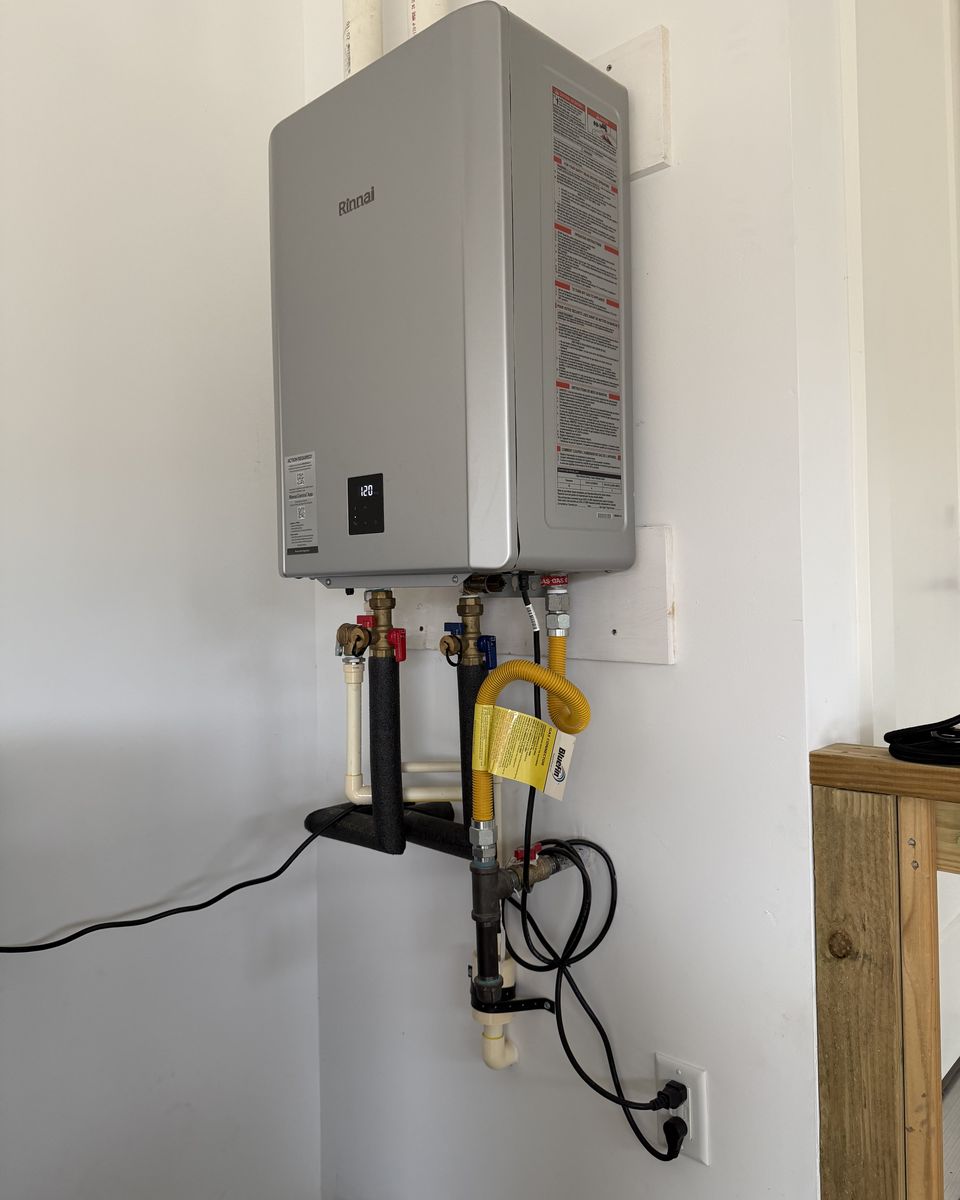
Signs it may be time to replace
- The unit is out of warranty and needs a major part, such as a heat exchanger.
- The same error codes keep coming back after repairs.
- The heat exchanger is leaking.
- Parts for an older model are hard to find.
- Your household's hot water needs have outgrown the unit.
Tankless water heaters often last 20 years or more with regular maintenance, so age alone is not a reason to replace one. On a younger unit, a repair is often the better value.
Like-for-like is the simplest job
Replacing a unit with a similar model that uses the same fuel and venting is usually the most straightforward option. Switching types adds work: going from a non-condensing to a condensing unit, for example, changes the venting and adds a condensate drain, and moving up to a larger unit can mean a bigger gas line. Condensing or non-condensing?
Replacing a tank instead?
Switching from a tank water heater to tankless is a conversion, which usually involves more work. See what a tankless installation involves.
Questions to ask before you replace
- Is a repair possible, and how does its cost compare with a new unit?
- Will the new unit work with the existing gas line and venting?
- Will the new unit have service valves for flushing?
- Who registers the new unit's warranty, and when?
- Will you pull the permit and haul away the old unit?
Same brand or a different one?
Staying with the same brand and a similar model can sometimes reuse the existing mounting, venting, and connections, which keeps the job simpler. Switching brands is common too, but vent materials and lengths are approved model by model, so ask whether your existing venting is approved for the new unit or will need to change. If your household's needs have grown, ask whether the gas line can feed a larger unit before you size up.
What commonly goes wrong on replacements
- Reusing venting that isn't approved for the new model.
- Sizing up the unit without checking that the gas line can supply it.
- Skipping service valves because the old install didn't have them.
- Never registering the new unit's warranty.
- Replacing a unit whose real problem was scale, a clogged inlet filter, or a low gas supply.
What replacement typically costs
A like-for-like tankless swap usually costs less than a first-time conversion from a tank, because the gas line, venting, and water connections are often already in place. As a national reference, Angi's 2026 cost data puts a typical tankless installation at about $1,400 to $3,900. Changing fuel, unit type, or size adds cost. Ask for a written quote that lists removal and disposal of the old unit, and remember that national figures aren't Richmond quotes.
When replacement isn't the right call
- The unit is still under warranty and the failed part is covered. Call the manufacturer or your original installer first.
- The real problem is scale buildup that a flush can fix. See flushing and maintenance.
- An error code points to something simple, like a clogged inlet filter or a gas supply issue. See common problems.
Replacement questions
How long does a tankless water heater last?
Often 20 years or more with regular maintenance, though hard water, skipped flushing, and installation problems can shorten that. That's one reason a repair is worth pricing before a replacement.
Can I switch from tankless back to a tank?
Yes. Some homeowners do when a tankless unit fails and a tank fits their needs and budget better. The contractor will need room for the tank and may need to change the venting and gas connection.
My unit is old but still works. Should I replace it now?
Not necessarily. Age alone isn't a reason. Regular flushing and fixing small problems can keep a unit running for years. Planning ahead makes sense if parts are getting hard to find or the same repairs keep coming back.
Is there still a federal tax credit for a new tankless unit?
The federal Energy Efficient Home Improvement Credit, which covered qualifying gas tankless water heaters, ended for equipment placed in service after December 31, 2025. Check with your tax preparer, and ask your contractor about any current utility rebates.
How we help
Call or send a short request and tell us about your home. We connect you with one independent, licensed contractor who serves your area. They evaluate your home and give you a quote, and you decide. There's no charge for the referral.
Want a licensed contractor to look at your home?
Call or send a short request. There's no charge for the referral.